13 March 2026
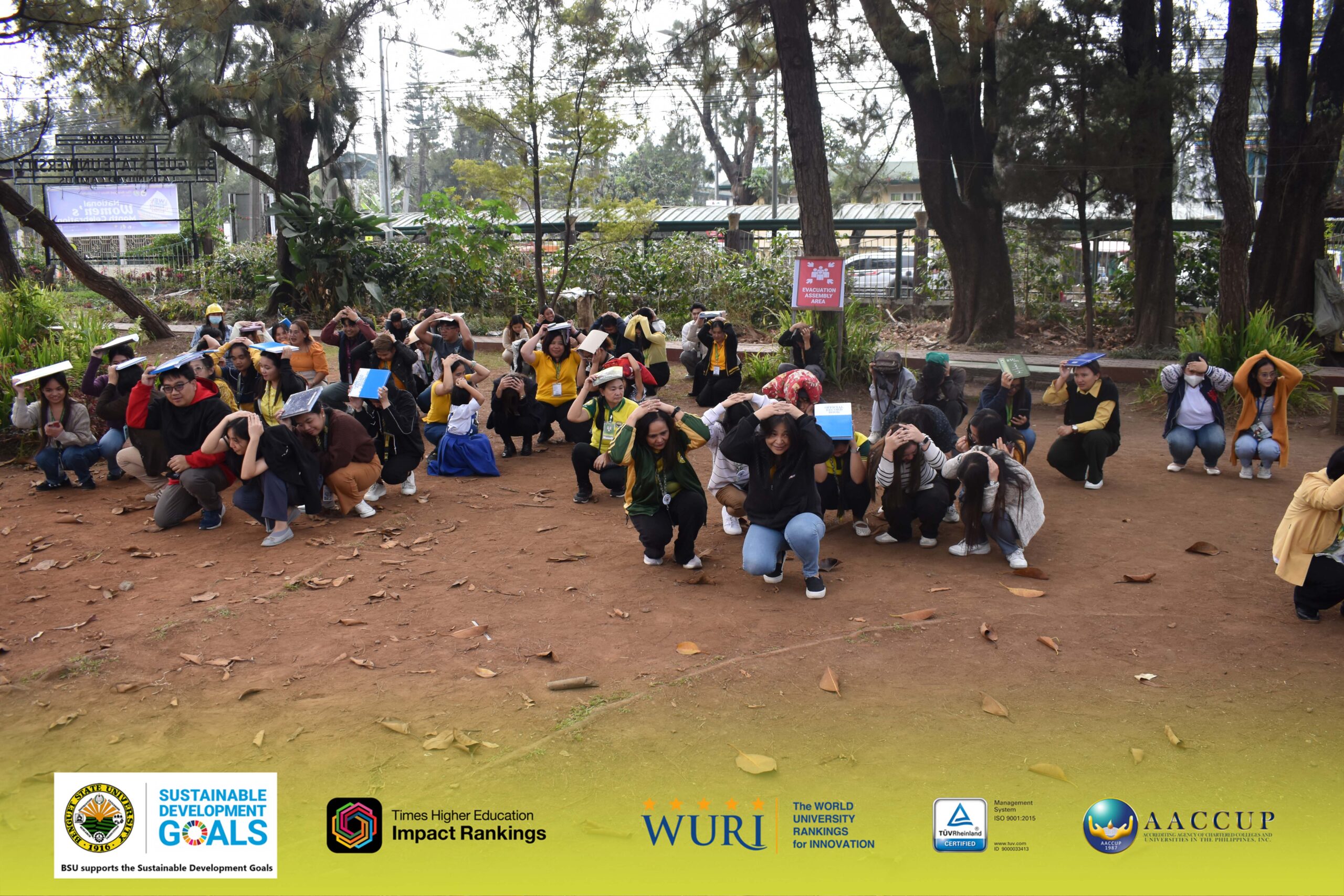
BSU joined the First Quarter Nationwide Simultaneous Earthquake Drill (NSED). The NSED is a quarterly exercise spearheaded by the Office of Civil Defense to promote earthquake awareness and preparedness of the general public.
It also aims to strengthen the preparedness of Local Government Units in the event of strong ground shaking and its secondary hazards like fire, tsunami, and liquefaction.
Generally, an earthquake drill has the following phases:
- EARTHQUAKE: A one-minute alarm indicates an earthquake or shaking.
- RESPONSE: While the alarm is ongoing, do the “DUCK/DROP, COVER, and HOLD.”Remain in this position until the alarm/shaking stops.
- EVACUATION:
- As soon as the alarm/shaking stops, immediately evacuate and proceed to identified evacuation areas using the pre-determined routes.
- If inside a building, take the safest and fastest way out.
- Be prepared for aftershocks.
- If you need to leave, post a message stating when you left and where you can be located.
- ASSEMBLY: At the designated evacuation area, residents/occupants must be grouped per household/workplace.
- HEAD COUNT: Leaders/head of the family should check and make sure that all members are accounted for.
- ASSESS AND ADDRESS EFFECTS
Leaders/head of the family should:
- Check others for injuries.
- Check gas, electrical, and water lines for damage.
- Check spills of chemical, toxic and flammable materials.
- Put out small fires which may spread.
- Assess the house or building for cracks and damage.
- EVALUATION OF DRILL: Over-all coordinator will announce the termination of drill or “all clear”. (must be applied to offices and community)