14-15 November 2026
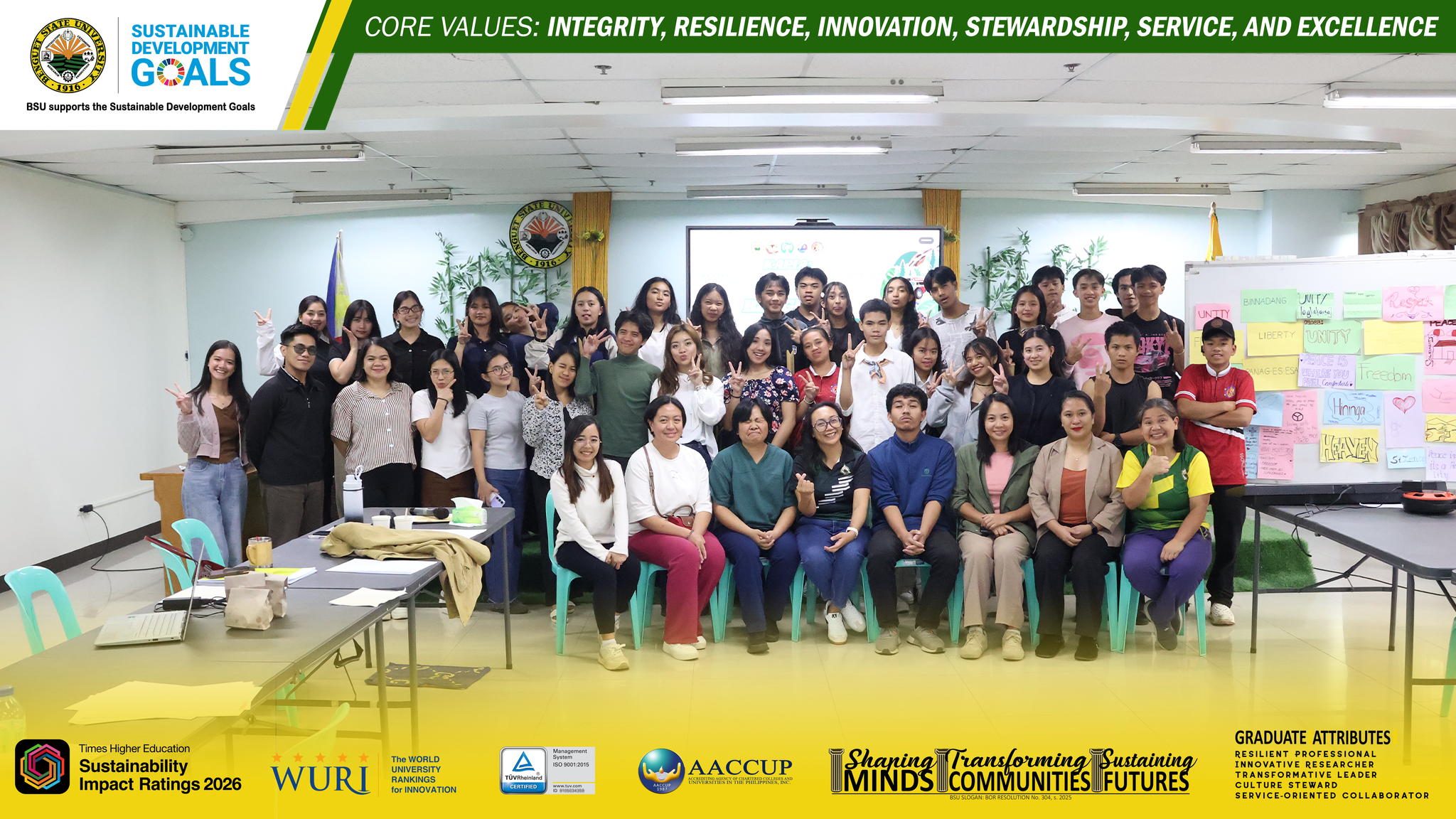
The Institute of Social Research and Development (ISRD), in partnership with the Office of Extension Services (OES) and the Office of the Presidential Adviser on Peace, Reconciliation and Unity (OPAPRU) conducted a two-day workshop titled,”KAPIA: Kabataan, Arts and Culture, Peacebuilding, Intergenerational Learning, and Action in Benguet.”
The two-day activity brought together students from Guinaoang National High School and Benguet State University (Buguias and La Trinidad campuses).
The activity provided a platform for the participants to reflect on their understanding of peace, recognize the importance of indigenous cultural values, and express their aspirations through various creative disciplines.
In her welcoming message, ISRD Director Ann Heather B. Kiwang, delivered by Kacy O. Labon, University Researcher II, emphasized the importance of strengthening youth participation in community development, particularly amid concerns about weak civic engagement among young people, increasing cases of bullying, and children in conflict with the law.
Furthermore, the rationale highlighted how indigenous communities maintain peaceful relationships through customary practices such as community dialogue, cooperation, respect for elders, collective responsibility, and customary agreements. These practices, together with the experiences and perspectives of the youth, were identified as valuable foundations for understanding and promoting peace.
VP for Research and Extension Roscinto Ian C. Lumbres appreciated the participants’ willingness in attending the activity and recognized the initiative as an opportunity for the Research and Extension sector to explore creative outputs as a means of reaching and inspiring the Filipino youth.
He also emphasized the university’s commitment to contributing to national development through research and creative initiatives, noting that artistic and creative expressions can help communicate meaningful messages and inspire the younger generation.
The first day featured sessions on peace education and an overview of documented indigenous knowledge and values of Benguet on peace, with elders from Benguet serving as reactors. These sessions provided participants with opportunities to understand peace from both community and cultural perspectives.
The discussions were complemented by cultural performances and a participatory, youth-centered learning workshop that encouraged the sharing of experiences, understanding and perspectives on peace between the youth and elders.
As part of the workshop proper, participants engaged in simultaneous creative workshops in visual arts, literary arts and creative writing, literary graphics, and music. The workshops continued on the second day, allowing participants to further develop their ideas and translate their reflections on peace into creative outputs.
The second day focused on the continuation of the workshops, followed by the critiquing and polishing of outputs. Facilitators and participants also took part in discussions on insights and recommendations, providing an opportunity to assess the activities and identify meaningful ways forward.
Taneg, Mankayan Sangguniang Kabataan (SK) Chairperson Dasinia P. Bucasen, together with selected student participants, shared their insights and recommendations based on their two-day experience. Their reflections highlighted the importance of youth involvement and collective action in promoting peace within their communities.
In her closing remarks, Kiwang emphasized the different dimensions of peace expressed by the participants. She also recognized the challenges faced by mining communities, particularly the conflicts arising from the protection of ancestral lands and natural resources.
She encouraged the youth to strengthen and uphold their cultural values, remember the sacrifices of their ancestors, and take an active role in protecting their ancestral lands. She stressed that the preservation of land and culture is a shared responsibility that extends to future generations.
Kiwang further reminded the participants that wherever life may take them, they should never forget their roots and should continue to love and protect the communities where they grew up.
Through KAPIA, BSU and its partner institutions reaffirmed the importance of integrating arts, culture, and indigenous knowledge into peace education. By providing young people with opportunities to learn from elders, exchange perspectives, and transform their ideas into creative expressions.//NSudaypan
📸EBawang