28 October 2026
The College of Social Sciences (CSS), in partnership with the International Relations Office (IRO), Gender and Development (GAD) Office, and the Office of Extension Services, conducted the “1st Nailami Mi, Naadal Mi.”
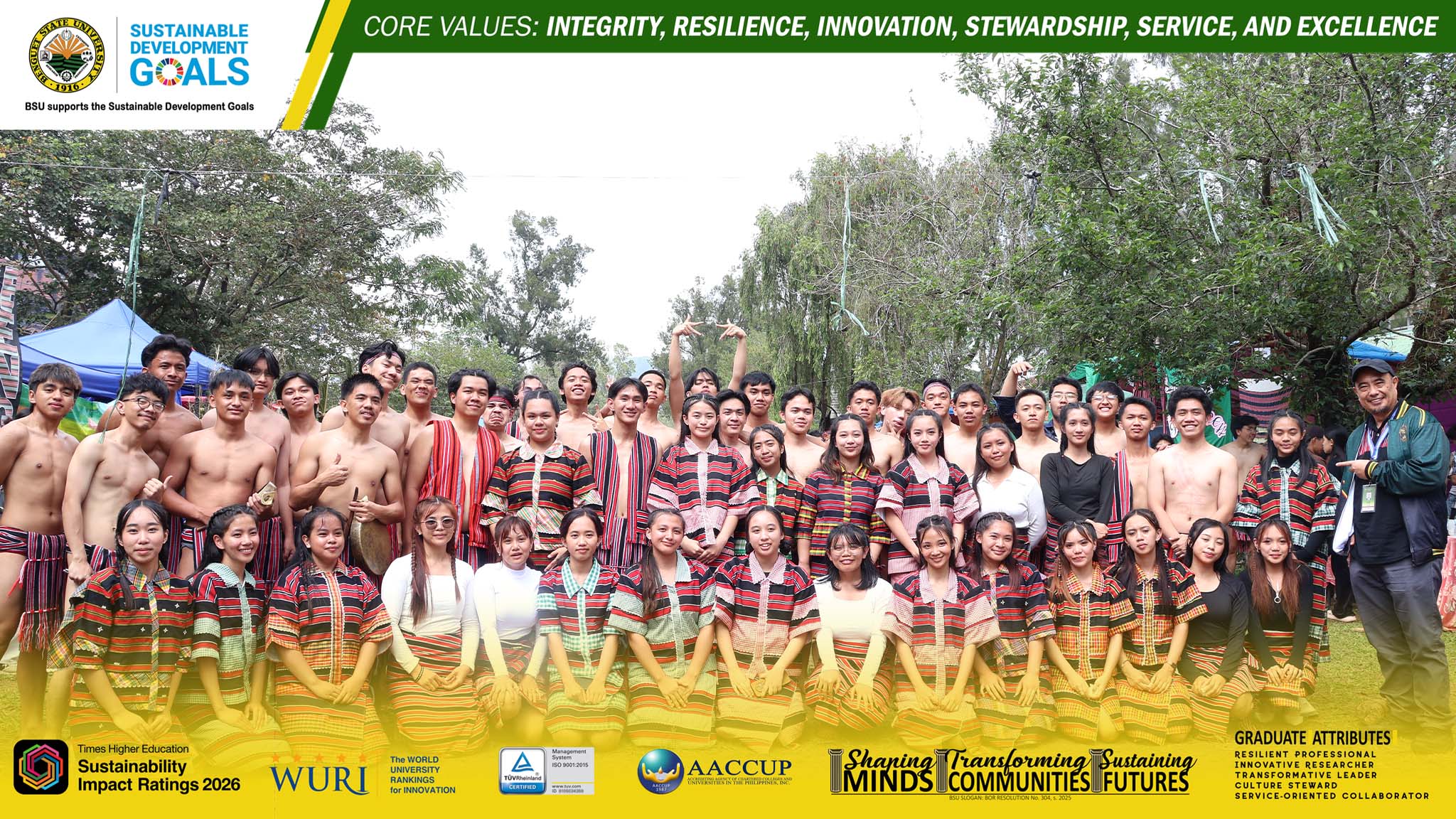
The event highlighted the rich cultural heritage, indigenous knowledge, and traditions of the Cordillera through student presentations featuring cultural songs, dances, indigenous foods, and traditional games.
The activity provided students with an avenue to explore and appreciate the region’s cultural identity through research and intercultural learning, emphasizing the importance of preserving indigenous knowledge and promoting cultural integrity.
In the welcome remarks delivered by CSS faculty member Mark Joshua Balao-as on behalf of CSS Dean Ma. Theresa Dolipas, the activity was described as more than a fulfillment of academic requirements, but a celebration of identity and living traditions.
The message recognized the efforts of the students in learning and presenting cultural practices, as well as the guidance of the evaluators and guests. It also emphasized the importance of honoring the wisdom of elders and sustaining an appreciation for indigenous heritage among the younger generation.
Meanwhile, IRO Director Rex John Bawang highlighted the importance of remaining grounded in one’s cultural roots amid internationalization. Bawang emphasized that cultural identity serves as a vital foundation for engaging with the global community.
He noted that internationalization not only involves participating in activities beyond the country, but also includes showcasing local traditions and cultural knowledge to people from different parts of the world.
In presenting the rationale for the activity, CSS instructor Gigi G. Banes explained that the word “first” in the title refers to the integration of indigenous peace processes into the program, building upon cultural presentations that have been conducted since 2009.
Banes highlighted the initiative’s goal of promoting Cordilleran Indigenous Knowledge Systems and Practices, peace processes, and gender awareness through intercultural exchange.
The culminating activity featured 20 groups representing various academic programs. Students showcased their research through performances of indigenous songs and dances, demonstrating their understanding of the cultural traditions they had studied.
The presentations were followed by a display of indigenous foods, featuring traditional dishes and specialties from across the Cordillera. This highlighted the region’s culinary diversity and the cultural knowledge embedded within its food practices.
Students also participated in indigenous games, adding an interactive component to the activity while allowing them to experience traditional forms of recreation and community engagement.
In her closing remarks, Shaina O. Lucyao, chairperson of the CSS-Department of History and Philosophy, expressed her appreciation to the organizers, faculty members, and students whose collective efforts contributed to the activity’s success.
Lucyao emphasized that the initiative should not be a one-time undertaking, but a continuous effort to strengthen cultural awareness and appreciation among students. She encouraged participants to translate what they had learned into individual and collective actions that support the preservation of indigenous heritage.
She also reminded participants that the protection of ancestral territories and the preservation of indigenous traditions remain vital concerns for Indigenous Peoples in the Cordillera.
The event underscored BSU’s ongoing commitment to fostering an academic environment where cultural heritage and academic excellence go hand in hand, empowering students to become active stewards of Cordilleran identity.//NSudaypan