
9 September 2026
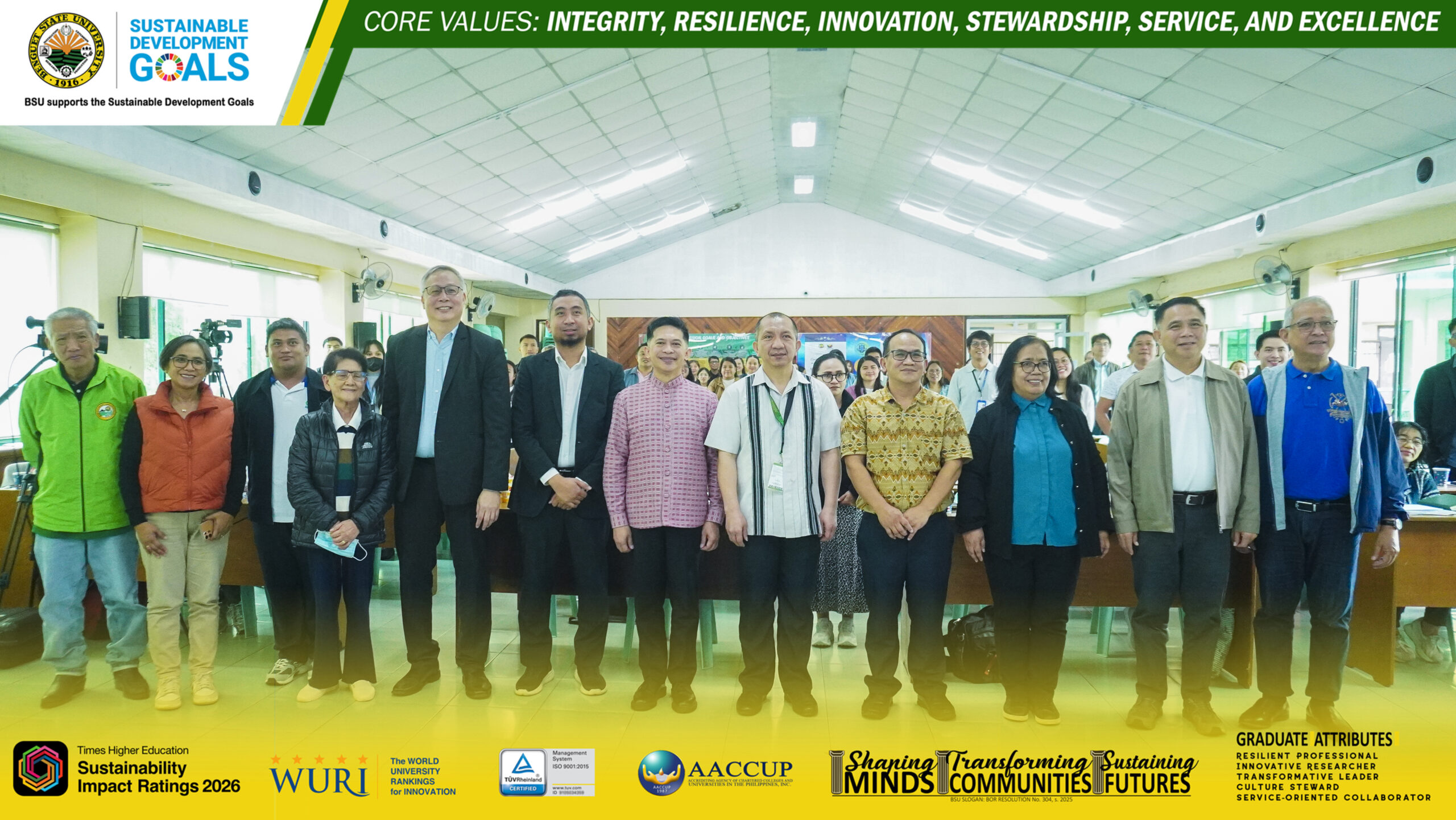
As part of the celebration of the Benguet State University (BSU) Foundation Anniversary and the Civil Service Commission (CSC) Month, BSU hosted the 2026 Cordillera Policy Research Forum, bringing together researchers, academic institutions, private-sector representatives, government agencies, and other stakeholders to strengthen the use of research in regional policymaking.
Benguet State University (BSU) hosted the 2026 Cordillera Policy Research Forum, bringing together researchers, academic institutions, private-sector representatives, and other stakeholders to strengthen the use of research in regional policymaking.
With the theme “Building Strong Institutions, Unlocking Human Capital Potential,” the forum highlighted the need to translate research findings into policies, programs, and actions that address the evolving development needs of the Cordillera.
In his welcome remarks, BSU President Kenneth A. Laruan stressed that development is not only about physical infrastructure but also about investing in people and strengthening institutions. He urged researchers and policymakers to ensure that research does not remain in folders but is used to improve policies and people’s lives.
He likewise congratulated the Institute of Social Research and Development (ISRD) for its recognition during the La Trinidad Foundation Day for its policy brief presentation based on research conducted by BSU researchers. He expressed hope that the initiative would be sustained in the coming years.
Meanwhile, Department of Economy, Planning, and Development–Cordillera Administrative Region (DEPDev-CAR) Regional Director Apollo Edwin S. Pagano said the forum’s theme is aligned with the priorities of the Regional Development Council (RDC), the Cordillera Regional Development Plan, and the Trabaho Para sa Bayan Plan.
Pagano emphasized that research and reliable evidence are important in setting regional priorities and guiding programs and investments.
“Research is not merely an academic exercise,” Pagano said, noting that research helps stakeholders understand problems, identify practical solutions, and make informed decisions that improve people’s lives.
He further stressed that regional development is a shared responsibility involving government, academe, the private sector, communities, students, young researchers, and innovators. He encouraged participants to actively engage in discussions and help ensure that research findings are translated into policies and actions.
A message of support from Benguet Governor Melchor D. Diclas, delivered by David Capoten, highlighted the provincial government’s commitment to evidence-based governance.
Diclas noted that development is not only about building roads, hospitals, schools, and other infrastructure but also about developing institutions that are capable, responsive, evidence-driven, and committed to public service.
The forum featured three sessions focusing on labor supply, labor demand, and labor market governance. Discussions examined workforce preparedness, public-sector emotional intelligence, workplace behavior, entrepreneurship, agricultural extension, women’s health, anti-poverty programs, emerging industries, and other concerns affecting employment and human capital development.
Panel discussions and open forums provided opportunities for researchers, government representatives, and other participants to discuss how research findings could be translated into concrete policies and programs.
In his closing remarks, RDC-CAR Co-Chairperson and Private Sector Representative for Social Development Arnel M. Cabanisas emphasized the importance of sustained collaboration among government, the private sector, and academic institutions.
Cabanisas called for stronger labor and employment mechanisms in the region and highlighted the need to effectively implement the Trabaho Para sa Bayan agenda. He also proposed strengthening existing institutional mechanisms, particularly the Subcommittee on Education and Workforce Development under the RDC’s Regional Social Development Committee, to address labor and employment concerns.
He noted that institutional arrangements should be aligned with Republic Act No. 11962, or the Trabaho Para sa Bayan Act, and Executive Order No. 82, which strengthens the role of Regional Development Councils.
Cabanisas also highlighted Project WEAVE (Working with Experts and Academy for a Visionary Economy), an RDC initiative that seeks to formalize the role of academic institutions as partners in regional governance.
Through Project WEAVE, academic institutions can contribute research, expertise, and innovation to regional planning and decision-making. Cabanisas emphasized that these partnerships can help ensure that policies, programs, and plans are grounded in evidence and science.
The participants, speakers and organizers underscored a common message throughout the forum that research should not end with publication or presentation. It must be translated into evidence-based policies, responsive programs, stronger institutions, and tangible improvements in people’s lives.//NBSudaypan