29 September-1 October 2026
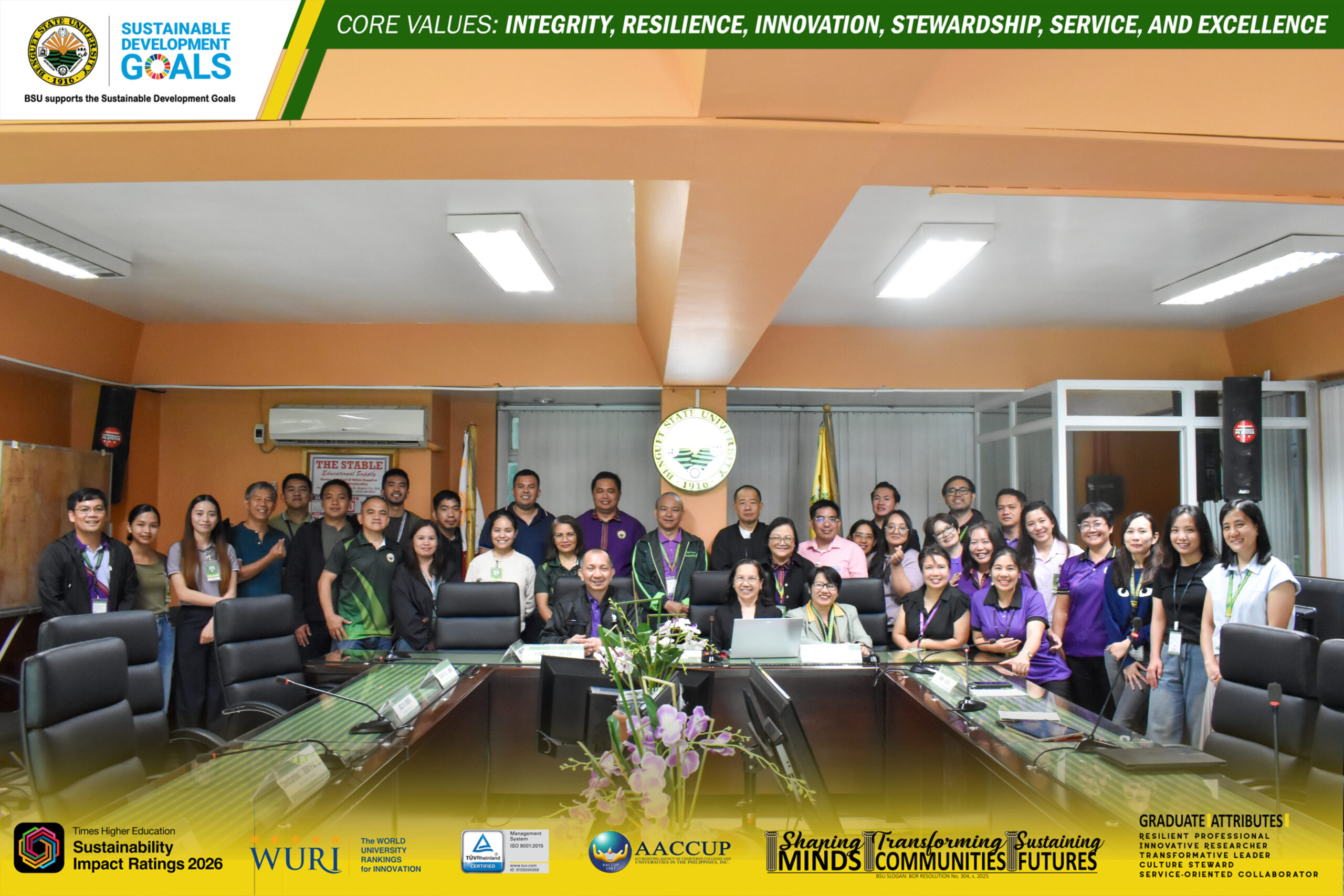
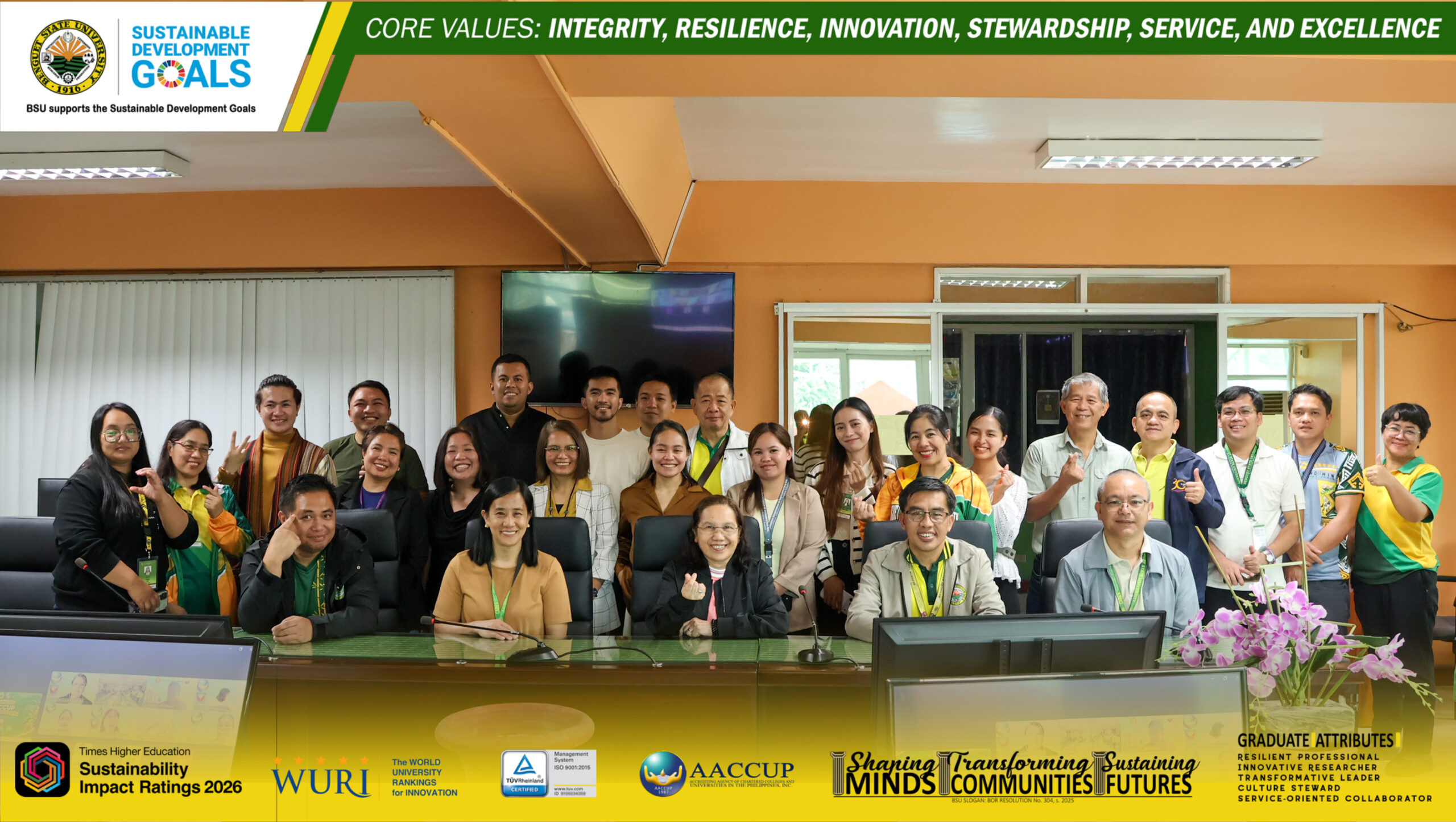
A team from the Accrediting Agency of Chartered Colleges and Universities in the Philippines (AACCUP) evaluated four Benguet State University degree programs for Level 4-Phase 2 during a Hybrid Accreditation Survey Visit.
The assessed programs included Doctor of Philosophy in Horticulture, Master of Science in Horticulture, Bachelor of Science in Agribusiness, and the Bachelor of Science in Statistics.
During the opening meeting on September 29, 2026, VP for Academic Affairs Janet P. Pablo emphasized that quality assurance mechanisms should not exist merely for compliance, but to be sustained, noting that the programs are evaluated for Level 4-Phase 2.
Pablo welcomed the accreditors and thanked the BSU faculty, staff, administrators, and stakeholders for their commitment to building and strengthening the university’s culture of quality education.
She urged everyone to reflect by asking: Are the quality practices and improvements that our colleges, our institution has established truly being sustained, institutionalized, and translated into better educational outcomes?
“Ultimately, this is what quality assurance should be about—not simply meeting standards, but ensuring that our efforts create a lasting and meaningful difference in the lives of our students as well as our stakeholders,” she said.
Following this, Office for Quality Assurance and Accreditation Director Joanna I. Alafag introduced the BSU officials and the AACCUP Overall Accreditor, Elsie M. Pacho from Don Mariano Marcos Memorial State University, who attended on-site. College of Agriculture Dean Constantino T. Sudaypan Sr. and College of Numeracy and Applied Sciences Dean Ederson Bawang introduced the Local Task Force from their respective colleges. Pacho also introduced the co-accreditors, shared the purpose of the visit, and provided an orientation on the accreditation process.
Other accreditors were Carmenchita M. Tumaca from Aklan State University, Amparo B. Lacandula from University of Southeastern Philippines, Pet Roey L. Pascual of Cebu Technological University, Cecile O. Legaspi from Aklan State University, Cristina R. Salvosa from Nueva Vizcaya State University, Shiela G. Reyes from Agusan Del Sur State University, and Alberto C. Arellano of University of Southern Mindanao.
The accreditation proper followed, evaluating the degree programs in areas of research; performance of graduates; community service; international linkages and consortia; and well-developed planning process.
At the closing meeting on October 1, 2026, Pacho presented the team’s findings on the evaluated programs.
“As we move forward, let this not be the end of an academic exercise, but the continuation of a commitment. Accreditation should not be seen as a periodic event, but as a culture and a way of life—a culture of evidence-based improvement, innovation, accountability, and excellence,” she said.
She expressed hope that the survey visit strengthened everyone through the experience, inspired by the feedback, and united in their determination to elevate the academic programs even further. She also encouraged everyone to carry forward the lessons learned, insights gained, and momentum built during the three-day evaluation.
In his message, VP for Administration and Finance Richard H. Kinnud, representing University President Kenneth A. Laruan, related the story of the Three Little Pigs to the accreditation process. In the fable, three pigs built their houses out of straw, sticks, and bricks. When the strong winds blew, only the brick house survived and provided safety from the wolf.
Drawing from the story, Kinnud stressed that the university should build systems on solid foundations by establishing sound policies, clear processes, reliable data, proper documentation, capable people, and practices that can withstand not only the accreditation visit, but the test of time.
He added that the university must ensure its programs remain relevant, curricula responsive, facilities adequate, faculty supported, and systems strong enough to sustain the quality that these programs and the students deserve.
Reaffirming the university’s commitment to quality education, Kinnud expressed, “On behalf of our university president, I affirm the university’s commitment to continue supporting the programs of the College of Agriculture and the College of Numeracy and Applied Sciences in strengthening those programs, improving systems, and responding to the recommendations and opportunities identified through this accreditation visit.”
The program concluded with closing remarks from CA Dean Sudaypan, emphasizing that accreditation is a “way of life.”
“The accreditation should not stop, because if we stop the accreditation, we stop the way of life. It will no longer be the College of Agriculture; it will no longer be the College of Numeracy and Applied Sciences,” he said.//EBawayan