20 April 2026
Benguet State University (BSU), through the College of Social Sciences (CSS), the Office of Extension Services (OES), the International Relations Office (IRO), the Gender and Development office, and the Institute of Social Research and Development, in collaboration with the Office of the Presidential Adviser on Peace, Reconciliation and Unity (OPAPRU), conducted a peace process capacity building in the cordillera.
The program formally opened with remarks from International Relations Office Director Rex John Bawang, who welcomed the participants and acknowledged the presence of partner institutions, guest speakers, and students. He emphasized the importance of integrating cultural appreciation into international engagements, describing the activity as a proud moment that highlights the richness of local traditions in a global context.
“The International Relations Office is a proud partner in this activity. Good morning to our guests, speakers, and students. Thank you for joining us. On behalf of Benguet State University and partners, welcome, let’s enjoy this activity together,” Bawang said. Following Bawang’s opening remarks, OPAPRU Project Leader Gigy G. Banes presented the rationale of the activity, sharing that this activity aimed to disseminate indigenous knowledge that the speakers gathered from elders from the different provinces of Cordillera.
After Banes’ presentation, the speakers presented their findings from their research and communications with elders of different provinces within the region.
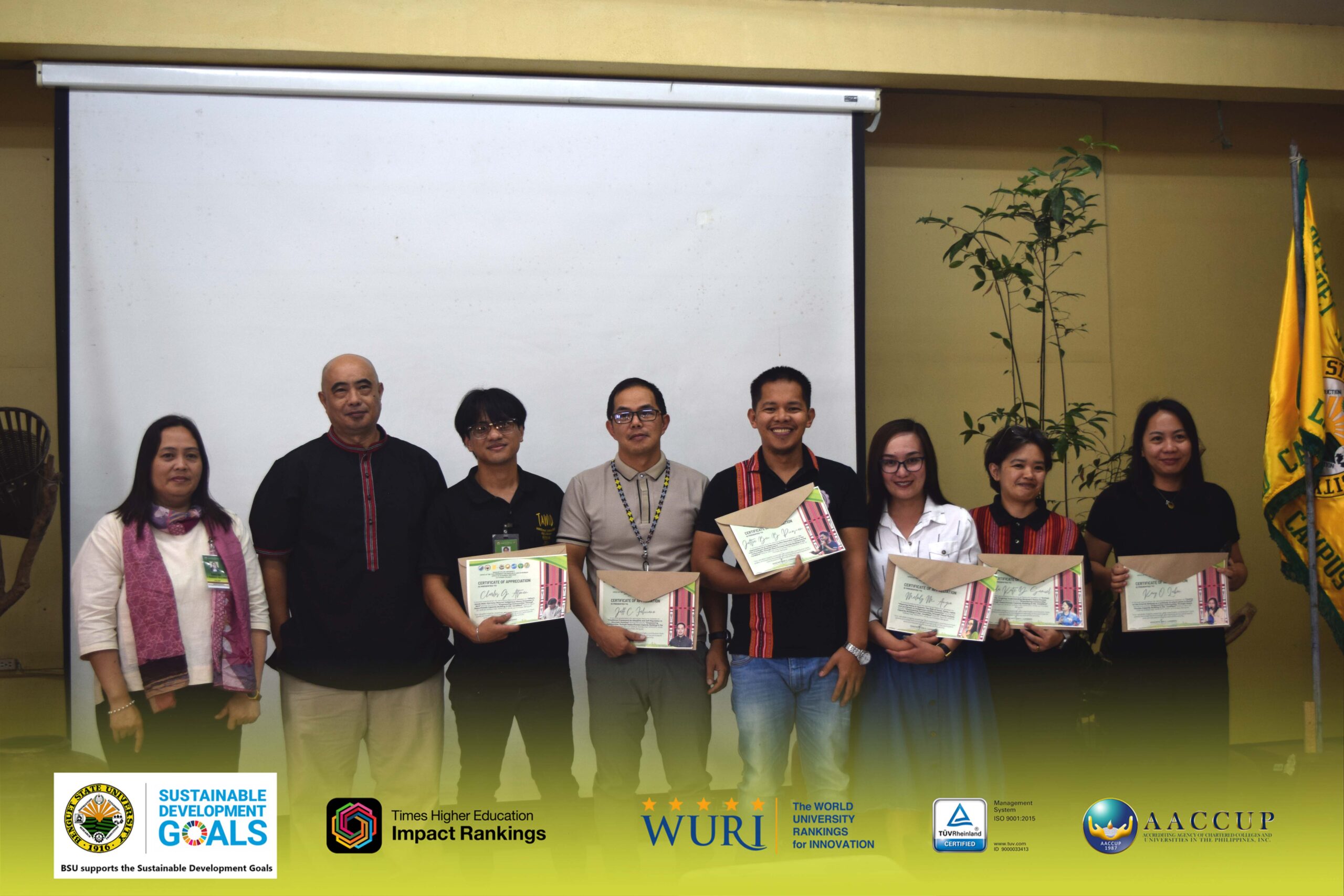
The speakers included OPAPRU Project Staff Charles Atones; CSS Faculty members Melody M. Angco and Jeff C. Feliciano; College of Numeracy and Applied Sciences Associate Dean Freda Kate D. Samuel; ISRD Staff Kacy O. Labon; and College of Home Economics and Technology Faculty Member Jefftee Ben B. Pinos-an.
CSS Dean Stanley F. Anongos closed the activity by comparing modern legal processes with traditional Cordillera peace-making practices that still actively resolve conflicts in communities.